

Air Bikes Explained
Fan-resistance cardio for arms and legs
An air bike uses a fan to create resistance as you pedal and push and pull the moving handlebars. The harder you work, the more resistance you feel.
What is an air bike and how does it work?
An air bike has a large fan wheel and two long moving handles linked to the exercise mechanism. Pedalling drives the fan while the handles travel backwards and forwards, allowing the arms and legs to contribute to the effort.
There is usually no need to change a magnetic resistance level. Moving the fan faster makes the effort harder, so the transition between comfortable work and very hard intervals can happen quickly.
The riding position is often more upright than on a spin bike. The fan creates a noticeable airflow noise, especially when the machine is being worked hard, which matters if you want very quiet workouts.
💡 Tip: If quiet workouts are essential, compare a magnetic upright or spin bike before choosing a fan-resistance machine.
Health and safety information: This guide gives general fitness information, not a diagnosis, treatment plan or personal medical advice. A comparison rating cannot tell you whether a machine is safe for your specific health, disability or recovery needs.
If you have a recent injury or operation, persistent pain, a condition affecting exercise or difficulty getting on and off the machine, speak to your GP, physiotherapist or another qualified healthcare professional before starting. Follow the manufacturer’s instructions, use a manageable effort and stop if you feel pain, dizziness, chest discomfort or unusual breathlessness. Seek urgent medical help for serious symptoms.
Benefits of a air bike
Air bikes are particularly useful for people who like simple, demanding intervals and want the upper body involved alongside the legs.
Why people use this machine
- Upper and lower body together: Pedals use the legs while handles push and pull against resistance.
- Natural change in resistance: Working harder against the fan makes each stroke and pedal turn feel more demanding.
- Short intervals or steady work: You can cycle continuously or alternate hard bursts with easy recovery.
- More upright seat than a spin bike: Many designs do not require a pronounced road-bike lean.
Using more muscle groups can make an interval feel demanding, but it does not mean the fan bike trains every muscle equally. The machine remains primarily a cardiovascular trainer.
Why the resistance feels different: A spin bike lets you set resistance and hold it. An air bike increases the load as the fan spins faster. You can therefore change effort almost instantly by pushing and pedalling harder. The trade-off is that the fan also gets noisier with speed.
Further evidence: A laboratory study on an air-braked arm-and-leg ergometer examined different contributions from the arms and legs. It confirms both limbs can participate, but it does not demonstrate that every muscle works equally hard. Read the supporting research.
Another useful source: In a study comparing leg-only cycling with combined arm-and-leg exercise, researchers found differences in perceived effort and cardiorespiratory responses. It supports the idea that adding arm movement changes the training demand rather than simply making a conventional bike noisier. See the source.
Which muscles does a air bike work?
An air bike uses moving handlebars and pedals together, so the legs and upper body both contribute to the effort. You can vary the emphasis by how hard you push and pull the handles, but the machine is intended for coordinated arm-and-leg exercise.
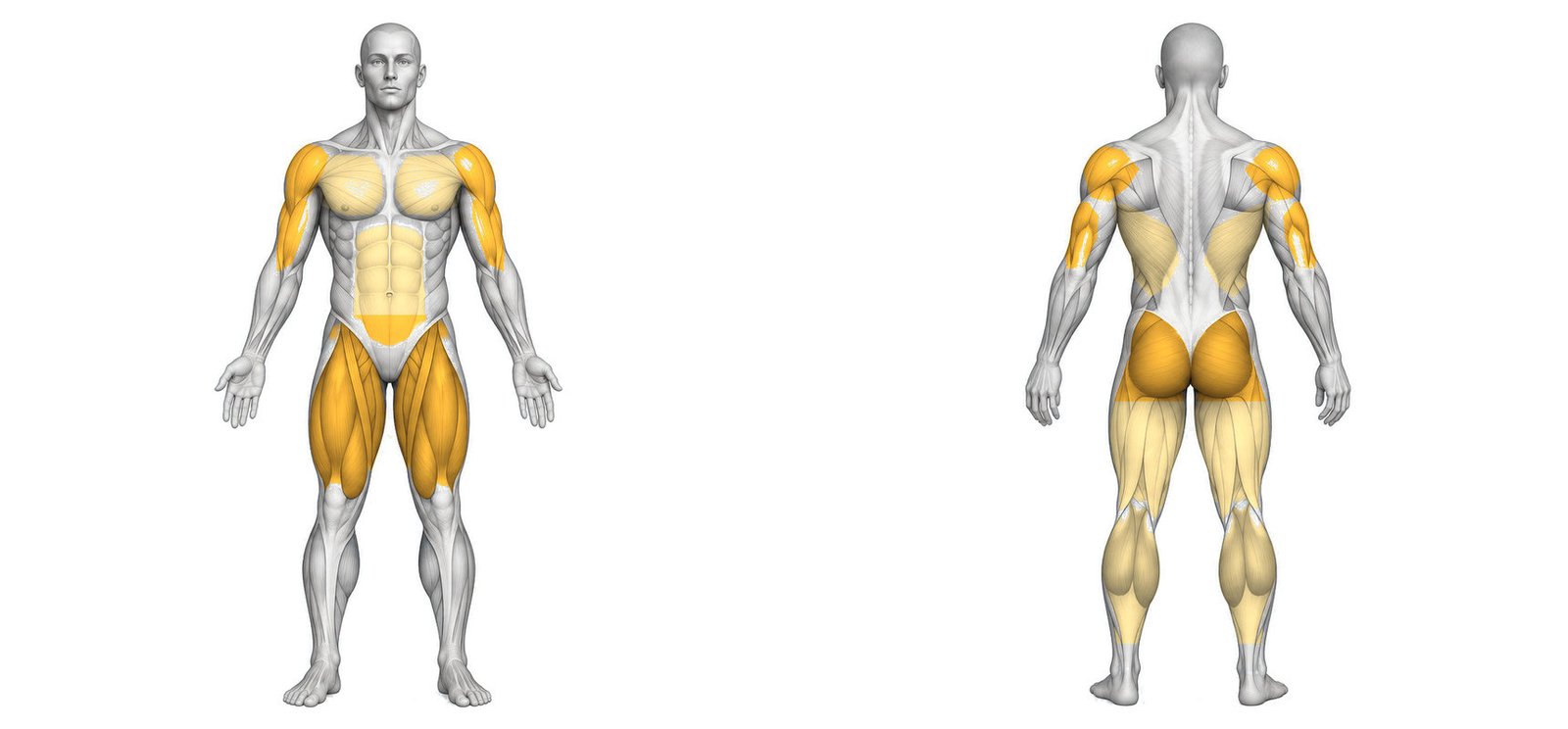
- Quads and glutes: Help drive the pedals and provide much of the leg effort.
- Hamstrings and calves: Assist and control the continuous pedalling movement.
- Shoulders and chest: Help push the moving handles forwards.
- Upper back and arms: Help pull the handles towards you on the return stroke.
- Core muscles: Keep your body steady as the arms and legs work against the fan resistance.
What the research says: A study of combined arm-and-leg high-intensity training found improvements in cardiorespiratory outcomes after a brief intervention. It supports the value of using both limbs in exercise, but the results cannot be transferred as a precise claim about every home air bike. Read the combined arm-and-leg interval study.
Can an air bike help with cardio fitness and weight management?
An air bike can be used at a steady pace or for short hard bursts. Fan resistance increases as you push harder, so the arms and legs can work together at a wide range of efforts.
Because the handlebars and pedals both move, the effort feels different from ordinary cycling. A harder workout isn't automatically a better one – use an intensity you can control.
Is an air bike low impact and suitable for limited mobility?
Your feet remain on the pedals, which avoids running-style foot strikes. The moving arms and the need to reach the saddle can still be awkward if your shoulder movement, balance or mobility is restricted.
The upright posture can be practical for some users, but it is not a guarantee of suitability after surgery or injury. Make sure you can safely mount, sit and reach the moving grips.
Who is a air bike suitable for?
It helps to look beyond whether a machine is described as suitable for beginners or low impact. Consider the movement it asks you to make, whether you can get on and off comfortably and how your body responds.
Who it can suit
- People who enjoy demanding intervals: Fan resistance responds immediately when you push harder.
- Anyone wanting arms and legs involved: The moving handles make upper-body movement a genuine part of the session.
- Users preferring a more upright cycling position: The usual seated posture can be less hunched than a spin-bike position.
Who may prefer a different machine
- Noise-sensitive households: The fan is usually much louder under hard effort than a magnetic exercise bike.
- People unable to control moving handles: Shoulder, wrist or balance restrictions may make access difficult.
- Anyone needing a backrest: A recumbent bike offers better torso support.
Injury or surgery: A machine may be commonly used in some rehabilitation settings without being right for your injury, operation or recovery stage. The medical guidance for your circumstances takes priority over a general comparison rating.
How to use a air bike
Use the machine’s own safety instructions, and begin with control rather than intensity. These steps describe the usual movement, not a substitute for the instructions for a particular model.
Getting started
- Set a comfortable saddle height: Make sure you can reach the pedals and handles without overstretching.
- Start with gentle combined movements: Let the legs and arms find the rhythm together.
- Increase effort gradually: The resistance rises automatically, so there is no need to sprint immediately.
- Ease down before stepping off: Keep control of the moving handles until the fan and pedals slow.
What to watch for: Air bikes are not the quietest home option, because the fan makes more noise as effort rises.
The handlebars move, so shoulder or hand discomfort may need a modification or a different machine.
The fan bike is not the same as a traditional upright bike, especially when considering upper-body work.
Can you use only the arms or legs? Some air bikes allow a degree of arm-only or leg-focused exercise, but the mechanisms differ. Check the maker’s instructions before using an unusual position. If one shoulder, wrist or leg is injured, do not assume you can simply avoid using it and continue normally.
Compare air bikes with other equipment
An upright bike and spin bike are mainly lower-body cardio. An air bike deliberately involves the arms through moving handles. A rowing machine also engages arms and legs but requires a coordinated seated pull and low sliding seat.
Getting the right posture: A more upright seat can feel friendlier than a deep spin-bike lean, but saddle height and moving handles still demand coordination. Start with both hands comfortably reaching the grips and with enough space for their complete travel.
Select up to two alternatives below. The first machine column stays fixed to this page, and the ratings explain typical equipment strengths, not personal medical suitability.
Compare with: Treadmills (1 of 2 selected)
Choose up to two other machines from the dropdown.
| Suitability | Air bikes | Treadmills |
|---|---|---|
| Low-impact movement | ✓ Good fit | Walking: ✓ Good fitRunning: ✕ Not a typical strength |
| Full-body workout | ✓ Good fit | ✕ Not a typical strength |
| High-intensity intervals | ✓ Good fit | ✓ Good fit |
| Steady cardio | ✓ Good fit | ✓ Good fit |
| Accessible for limited mobility | ✓ Good fit | ✕ Not a typical strength |
| Compact footprint | ✓ Good fit | ✕ Not a typical strength |
| Quiet workouts | ✕ Not a typical strength | ✕ Not a typical strength |
Low-impact movement
Full-body workout
High-intensity intervals
Steady cardio
Accessible for limited mobility
Compact footprint
Quiet workouts
Why these ratings?
Air bikes: Moving handles and pedals train arms and legs. The seated posture is fairly upright, but mounting and moving the arms can still be challenging. Fan resistance produces noticeable airflow noise that increases as effort rises.
Treadmills: Treadmills suit sustained walking or running and hard intervals. Walking has less impact than running, but a moving belt and footfalls are noticeable, particularly when running. Most standard treadmills take up significant space and require good standing balance.
Ratings describe typical equipment, not every model. Quietness also depends on the room, flooring, intensity and maintenance. Low impact does not mean painless, and suitability after injury or surgery needs individual advice.
For suggestions based on how you prefer to move, your available space and whether quiet workouts matter, use the Fitness Equipment Finder.
FAQ
Is an air bike a full-body workout?
It involves both the upper and lower body through the moving handles and pedals. It is still mainly a cardio machine, not a replacement for all strength exercises.
Are air bikes good for intervals?
Yes. Fan resistance responds directly to effort, making bursts and recovery periods easy to alternate.
Are air bikes quiet?
No, quiet sessions are not a typical strength. The fan produces airflow noise, especially at harder efforts.
Is an air bike low impact?
Pedalling keeps the feet supported and avoids the repeated foot landing of running.
Can beginners use an air bike?
Many can at an easy pace, provided they can mount safely and coordinate the moving arms and legs.
What muscles does an air bike work?
Leg muscles drive the pedals, while the shoulders, arms and upper back assist the moving handlebars. The core stabilises the torso.
Is an air bike good after injury or surgery?
Not automatically. The combined arm and leg movement may be unsuitable for some recovering joints. Follow medical guidance.
Do air bikes use magnetic resistance?
Usually not. Most conventional air bikes use a fan; resistance rises as you pedal and push or pull harder.
Is an air bike better than a spin bike?
An air bike actively involves the arms and is usually louder. A magnetic spin bike is mainly lower-body cycling and often suits quieter home exercise better.
Author: Ian Smith For the past five years I’ve worked in marketing for one of the UK’s leading fitness equipment brands. During this time I’ve learnt a thing or two about fitness equipment: what’s out there and commonly asked customer questions. I also regularly used the equipment myself and would help test out new products. LinkedIn profile
Affiliate Disclosure: This page contains affiliate links. If you click through and buy something, I may earn a commission at no extra cost to you – this doesn’t affect my opinions and reviews. As an affiliate I earn from qualifying purchases.