
Rowing Machines Explained
Rowing technique, muscle involvement and benefits
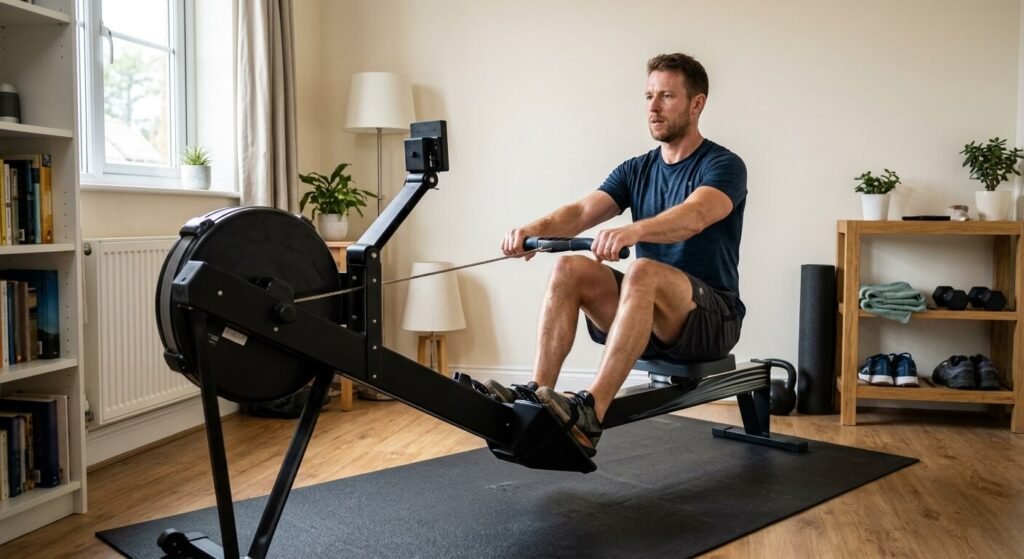
A rowing machine uses a sliding seat, footplates and a handle to recreate the main movement of rowing on water. Legs, core and arms work in sequence.
What is a rowing machine and how does it work?
On most rowing machines you sit on a low sliding seat, secure your feet and draw a handle towards your body. The resistance comes from a fan, magnetic system, water tank or other mechanism, depending on the model.
The rowing stroke has two parts: the drive, when you push with the legs and then finish with the body and arms, and the recovery, when you return to the start. Learning the order makes the motion feel smoother and less like pulling with your lower back.
Unlike an exercise bike, rowing asks you to coordinate the hips, knees, core and shoulders through a repeated stroke. That is why technique and seat access matter as much as the resistance setting.
💡 Tip: Learning “legs, body, arms – arms, body, legs” is a more useful starting point than trying to row as fast as possible.
Health and safety information: This guide gives general fitness information, not a diagnosis, treatment plan or personal medical advice. A comparison rating cannot tell you whether a machine is safe for your specific health, disability or recovery needs.
If you have a recent injury or operation, persistent pain, a condition affecting exercise or difficulty getting on and off the machine, speak to your GP, physiotherapist or another qualified healthcare professional before starting. Follow the manufacturer’s instructions, use a manageable effort and stop if you feel pain, dizziness, chest discomfort or unusual breathlessness. Seek urgent medical help for serious symptoms.
Benefits of a rowing machine
The appeal of rowing is combining lower-body work and a substantial upper-body pull in a continuous cardio movement.
Why people use this machine
- Large muscle groups involved: The legs generate much of the drive, with the core and arms completing the stroke.
- Steady cardio or intervals: Maintain a smooth stroke rhythm or work in short controlled bursts.
- Supported seated position: Feet stay on footplates and the body sits during the stroke.
- Different resistance designs: Air, magnetic and water machines feel and sound different in use.
A faster stroke rate is not necessarily a better session. Smooth coordination and a solid push from the legs are more useful than yanking the handle or leaning far backwards.
The stroke is not an upper-body tug: Press through the footplates first and let the body and arms follow. If you bend your arms early and strain to drag the handle back, you can lose the contribution from the much larger leg muscles. A few minutes of slow practice are worthwhile before increasing effort.
Further evidence: An indoor-rowing study measured leg-muscle activation and found that several muscles became active at different parts of the stroke. This reinforces the importance of coordinated timing, not simply pulling harder with the arms. Read the supporting research.
Another useful source: A sports-science study involving elite rowers found that hip and knee movement patterns influenced force production on a rowing ergometer. This supports paying attention to leg, body and arm coordination, although the study does not establish one perfect technique for everybody. Read the rowing biomechanics study.
Which muscles does a rowing machine work?
Rowing uses a sequence of leg drive, core movement and arm pull. The legs provide the initial push, the core transfers force and the arms finish the stroke. The return phase prepares you for the next one; pulling with your arms too early changes the technique.
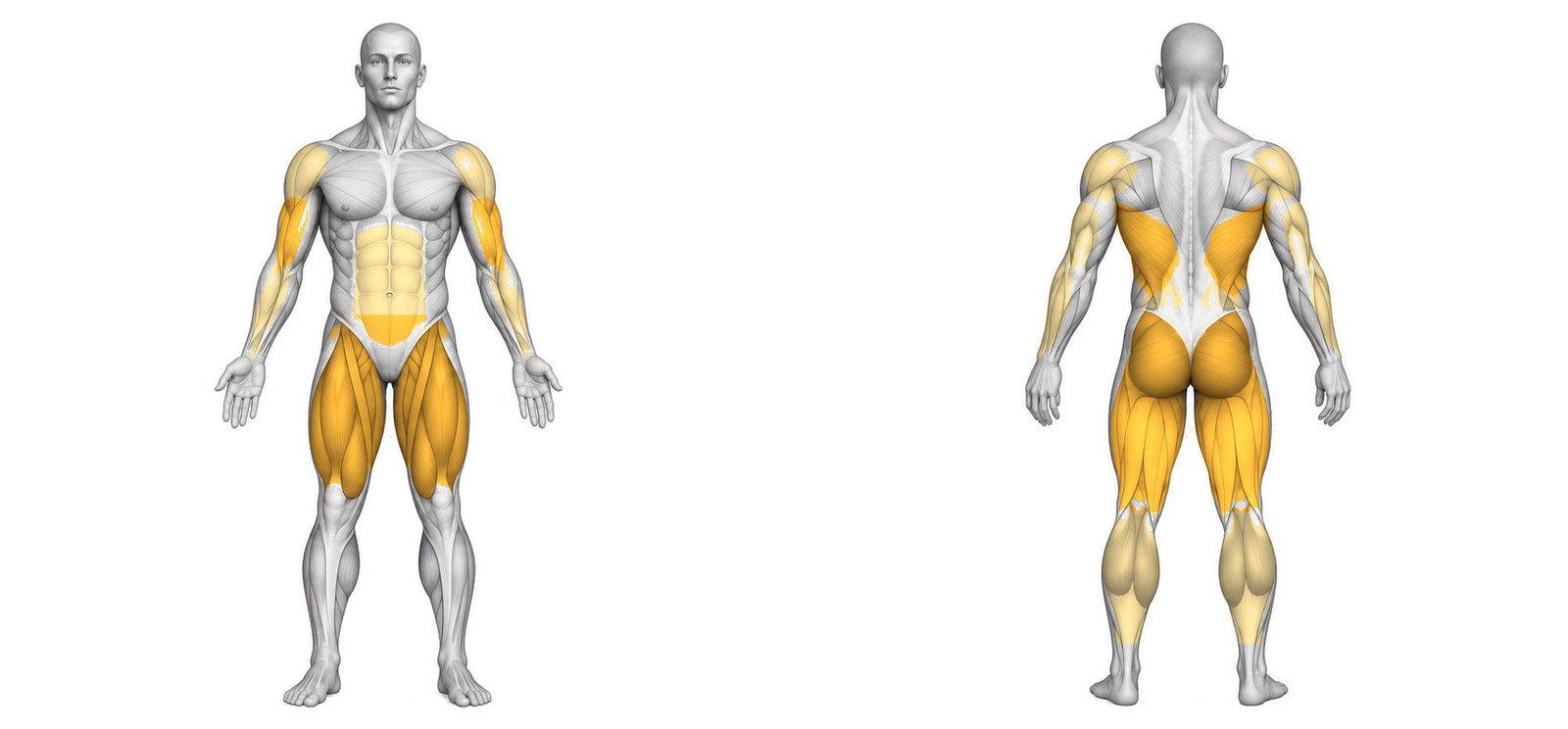
- Quads and glutes: Provide the leg drive as you push through the footplates.
- Hamstrings: Assist hip movement and help control the recovery phase.
- Upper back and lats: Help draw the handle towards the body.
- Arms and shoulders: Complete the pull and guide the handle during recovery.
- Core and spinal stabilisers: Help transfer force between the legs and upper body while maintaining good posture.
What the research says: Electromyography research on indoor rowing identified changing contributions from the arms, legs and torso across the stroke. The finding supports rowing as a coordinated movement rather than an arm-only pull, but it does not measure whole-body strength gains from a typical home workout. Read the rowing muscle activity research.
Can a rowing machine improve fitness and help manage weight?
Rowing uses the legs, core and arms during continuous strokes, which can raise your heart rate through both steady efforts and intervals. Stroke rate alone does not tell you how hard you are working.
Technique matters. Driving with the legs before pulling the handle is generally more useful than simply rowing faster with a rounded back.
Is rowing low impact and comfortable for the back and knees?
Rowing is usually described as low impact because your feet stay on the footplates and there are no running-style landings. Even so, the knees and hips bend deeply, and the lower back contributes to the movement.
If you have pain or restricted mobility, check whether you can reach the low seat and perform the stroke without discomfort. A general low-impact rating is not medical clearance.
Who is a rowing machine suitable for?
It helps to look beyond whether a machine is described as suitable for beginners or low impact. Consider the movement it asks you to make, whether you can get on and off comfortably and how your body responds.
Who it can suit
- People wanting arms and legs involved: The stroke recruits several large muscle groups in sequence.
- People who enjoy rhythmic exercise: A consistent stroke can work well for steady cardio.
- Those happy to practise technique: Learning the leg-body-arm sequence improves control.
Who may prefer a different machine
- People who struggle to sit or rise from a low seat: A standard rower can be difficult to access.
- Anyone with painful hip or back movement: The repeated hip hinge and leg bend may aggravate symptoms.
- Very small rooms: Long rails need operating space even on rowers that store upright.
Injury or surgery: A machine may be commonly used in some rehabilitation settings without being right for your injury, operation or recovery stage. The medical guidance for your circumstances takes priority over a general comparison rating.
How to use a rowing machine
Use the machine’s own safety instructions, and begin with control rather than intensity. These steps describe the usual movement, not a substitute for the instructions for a particular model.
Getting started
- Set your feet on the footplates: Adjust straps so they secure the forefoot without restricting movement.
- Start with arms extended and knees bent: Keep the back neutral and shoulders relaxed at the catch.
- Push legs, then swing the body, then pull arms: Make the drive a coordinated sequence, not an arm tug.
- Return arms, body, then legs: Keep recovery controlled before the next leg drive.
What to watch for: Air and water rowers make distinctive resistance noises. Magnetic models may suit quieter rooms better.
Upright storage reduces storage footprint but does not change the length needed during exercise.
A rowing stroke should not require rounding the back or snapping backwards at the finish.
Resistance does not work the same on every rower: Air machines respond to stroke effort and the fan creates noise. Water rowers have a distinctive water sound. Magnetic resistance models may feel quieter and allow a set resistance level. None of those differences automatically determines whether the rowing action is safe or correctly performed.
Compare rowing machines with other equipment
Compared with a cross trainer, rowing is seated and requires a pronounced leg drive followed by upper-body pulling. Compared with an air bike, rowing uses a sliding seat and more technique. A recumbent bike is usually easier to access for people who need back support.
Space and accessibility: A rowing machine needs length for the rail and for a person to move fully through the stroke. The low seat is another practical limitation for people who have difficulty bending the knees deeply or getting up from the floor. A raised-seat design can change this, but it should not be assumed.
Select up to two alternatives below. The first machine column stays fixed to this page, and the ratings explain typical equipment strengths, not personal medical suitability.
Compare with: Treadmills (1 of 2 selected)
Choose up to two other machines from the dropdown.
| Suitability | Rowing machines | Treadmills |
|---|---|---|
| Low-impact movement | ✓ Good fit | Walking: ✓ Good fitRunning: ✕ Not a typical strength |
| Full-body workout | ✓ Good fit | ✕ Not a typical strength |
| High-intensity intervals | ✓ Good fit | ✓ Good fit |
| Steady cardio | ✓ Good fit | ✓ Good fit |
| Accessible for limited mobility | ✕ Not a typical strength | ✕ Not a typical strength |
| Compact footprint | ✕ Not a typical strength | ✕ Not a typical strength |
| Quiet workouts | ✕ Not a typical strength | ✕ Not a typical strength |
Low-impact movement
Full-body workout
High-intensity intervals
Steady cardio
Accessible for limited mobility
Compact footprint
Quiet workouts
Why these ratings?
Rowing machines: Rowing uses legs, core and arms for steady work or intervals. Common air-rower flywheels make a noticeable whooshing noise; magnetic rowers can be much quieter. Low seat height and a long operating footprint affect accessibility and space.
Treadmills: Treadmills suit sustained walking or running and hard intervals. Walking has less impact than running, but a moving belt and footfalls are noticeable, particularly when running. Most standard treadmills take up significant space and require good standing balance.
Ratings describe typical equipment, not every model. Quietness also depends on the room, flooring, intensity and maintenance. Low impact does not mean painless, and suitability after injury or surgery needs individual advice.
For suggestions based on how you prefer to move, your available space and whether quiet workouts matter, use the Fitness Equipment Finder.
FAQ
Is a rowing machine a full-body workout?
Yes, it actively involves the legs, core and upper body, though muscle emphasis changes during the stroke.
Do rowing machines work your legs or arms more?
The legs start the drive and produce much of the force; the body and arms finish the movement.
Are rowing machines low impact?
They avoid repeated running landings because the feet stay supported on the footplates.
Are rowing machines good for beginners?
Yes for many people, although learning the correct stroke sequence is important.
Can rowing hurt your back?
Poor technique or an inappropriate range of movement can aggravate discomfort. Seek tailored advice if you have persistent back pain.
Are rowing machines quiet?
It depends strongly on resistance design. Fans and moving water make noise; some magnetic models are quieter.
Do rowing machines take up much space?
They are often long during use, even when the frame folds or stores upright.
Do rowing machines work the stomach muscles?
The abdominals help stabilise and transfer force during the stroke, but rowing does not specifically target stomach fat.
Is rowing better than cycling?
Rowing involves a more substantial upper-body pull; cycling is mechanically simpler and often easier to access. The better choice depends on comfort and goals.
Author: Ian Smith For the past five years I’ve worked in marketing for one of the UK’s leading fitness equipment brands. During this time I’ve learnt a thing or two about fitness equipment: what’s out there and commonly asked customer questions. I also regularly used the equipment myself and would help test out new products. LinkedIn profile
Affiliate Disclosure: This page contains affiliate links. If you click through and buy something, I may earn a commission at no extra cost to you – this doesn’t affect my opinions and reviews. As an affiliate I earn from qualifying purchases.