
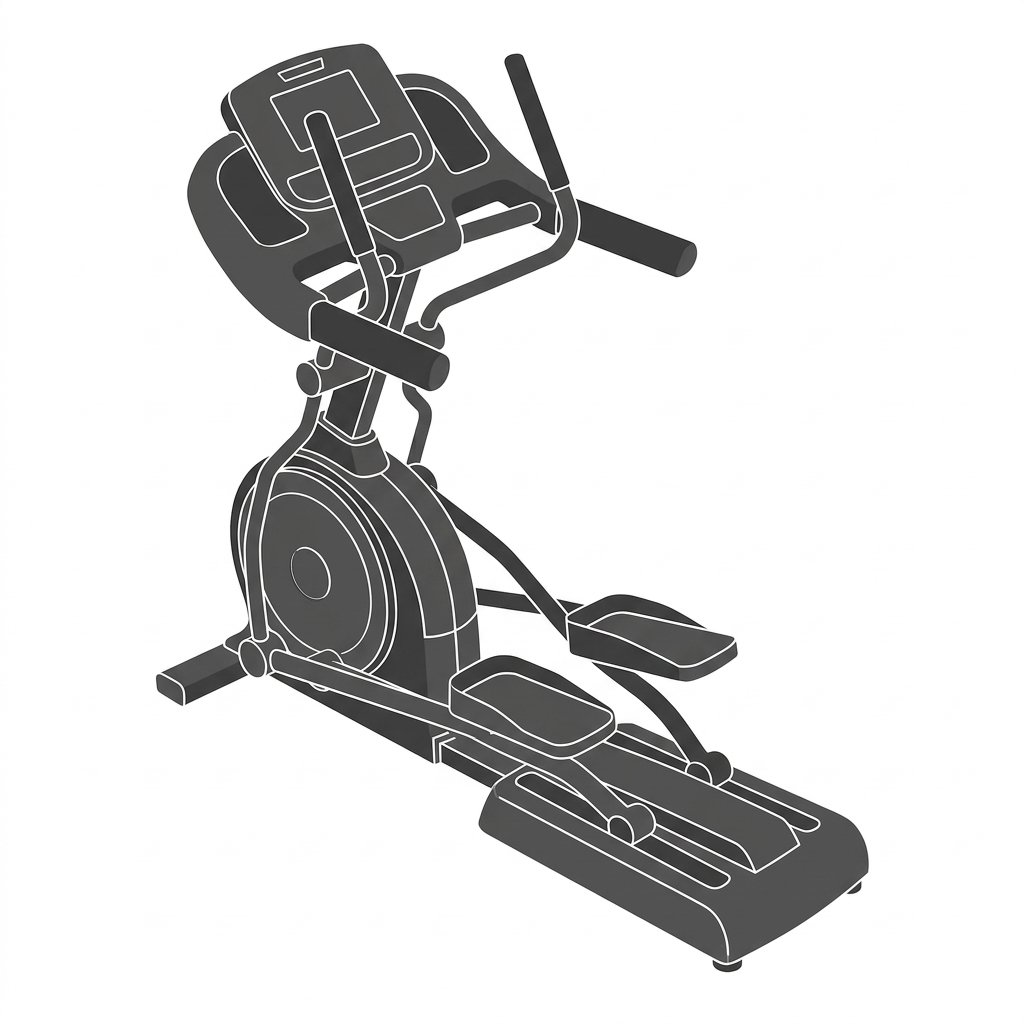
Upright Exercise Bikes Explained
Comfortable cycling, benefits and suitability
An upright exercise bike offers seated indoor cycling with the pedals beneath the rider and a more upright posture than most spin bikes.
What is an upright exercise bike and how does it work?
An upright exercise bike has a saddle above the pedals, handlebars within easy reach and resistance you can change as you pedal. Many models use magnetic resistance, although the mechanism varies.
You sit in a recognisable cycling position but typically without the aggressive forward lean common on spin bikes. A display may show speed, time and estimated effort, but those readouts are not required to benefit from cycling.
The feet remain on the pedals throughout the movement, so you can train cardio fitness without the repeated landing of running. The seat still needs to be at a suitable height and you must be able to mount safely.
💡 Tip: If getting onto a high saddle is the problem, compare the step-over height and seating on a recumbent bike before choosing.
Health and safety information: This guide gives general fitness information, not a diagnosis, treatment plan or personal medical advice. A comparison rating cannot tell you whether a machine is safe for your specific health, disability or recovery needs.
If you have a recent injury or operation, persistent pain, a condition affecting exercise or difficulty getting on and off the machine, speak to your GP, physiotherapist or another qualified healthcare professional before starting. Follow the manufacturer’s instructions, use a manageable effort and stop if you feel pain, dizziness, chest discomfort or unusual breathlessness. Seek urgent medical help for serious symptoms.
Benefits of a upright exercise bike
An upright bike is often one of the more straightforward ways to add regular indoor cardio, particularly if you want a familiar pedal movement without a long running belt or complicated technique.
Why people use this machine
- Steady cardio: Choose a comfortable pace and resistance for continuous cycling.
- Generally upright posture: Compared with most spin bikes, reaching the bars often requires less forward lean.
- Limited foot impact: Pedalling avoids the repeated foot strikes of running.
- Usually manageable footprint: Many upright bikes fit into a modest exercise area and are relatively easy to reposition.
The seat and handlebar arrangement can make it easier to remain upright than on a spin bike, but it is still a saddle that you have to step over or reach. A recumbent bike is usually easier for people who need lower access and back support.
Comfort depends on more than posture: An upright riding position helps avoid a deep forward lean, but saddle shape and reach still matter. If you have to lift your shoulders or lean heavily onto the handlebars, the bike may not be adjusted correctly or may not fit you well.
Further evidence: Researchers comparing recumbent and upright pedalling reported broadly similar muscle functions when differences in body orientation were considered. The practical question for a home user is still which position is comfortable and accessible. Read the supporting research.
Another useful source: Laboratory comparisons of upright, recumbent and supine cycling have reported different peak exercise responses at demanding workloads. That supports treating posture as a meaningful exercise variable; it is not evidence that one particular home bike is better for everyone. See the source.
Which muscles does a upright exercise bike work?
An upright exercise bike primarily trains the legs while you pedal in a relatively upright seated position. The saddle and handlebars support your posture; the core helps keep you steady. Your upper body is not working against a separate resistance mechanism.
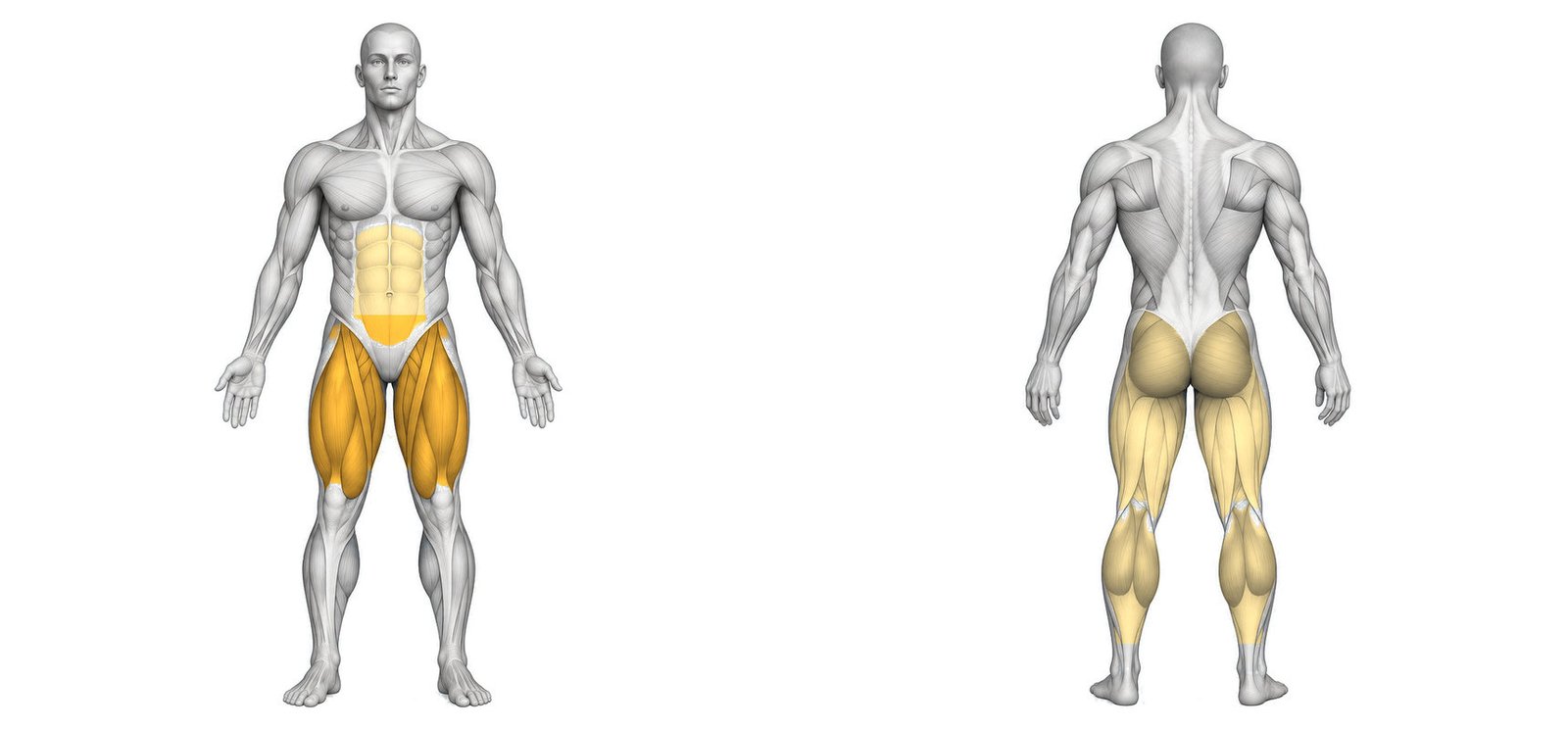
- Quads (front of thighs): Help push the pedal through its power phase.
- Glutes (buttocks): Contribute as the hip extends during each revolution.
- Hamstrings: Help coordinate the leg through the pedal cycle.
- Calves: Assist the ankle and transfer force to the pedals.
- Core and postural muscles: Help keep you steady on the saddle.
What the research says: A small study compared leg-muscle activity during upright and recumbent cycling and found no statistically significant overall difference across the four muscles tested at moderate effort. That supports the idea that both can train the legs, but it does not make their seating equally accessible. Read the upright and recumbent bike muscle study.
Can an upright bike improve fitness and help with weight management?
An upright bike suits controlled steady cardio at home. Increasing pedal resistance or maintaining a brisk rhythm can make it challenging without needing the standing sprint position associated with spin bikes.
Regular sessions can support overall fitness and energy expenditure. The bike does not burn fat from a particular body part, and workout estimates on its console are approximations.
Is an upright exercise bike low impact?
Cycling keeps your feet on the pedals and avoids repeated landing forces from running. Your knees and hips still work through every revolution, so seat position and resistance matter.
Begin with a comfortable seat height and modest resistance. People with balance or mobility restrictions should check whether they can mount and dismount safely.
Who is a upright exercise bike suitable for?
It helps to look beyond whether a machine is described as suitable for beginners or low impact. Consider the movement it asks you to make, whether you can get on and off comfortably and how your body responds.
Who it can suit
- Beginners wanting seated cardio: Pedalling at low resistance has a familiar movement and easy-to-adjust effort.
- People who dislike leaning forward: The more upright seated position can be more comfortable than a typical spin bike.
- Homes with limited exercise space: Many upright machines are comparatively narrow and have transport wheels.
Who may prefer a different machine
- People who need a low step-on seat: The saddle height and frame may be hard to mount safely.
- Users wanting a supported backrest: A recumbent bike provides more support behind the torso.
- People seeking intense out-of-saddle cycling: A spin bike is usually designed more specifically for that style.
Injury or surgery: A machine may be commonly used in some rehabilitation settings without being right for your injury, operation or recovery stage. The medical guidance for your circumstances takes priority over a general comparison rating.
How to use a upright exercise bike
Use the machine’s own safety instructions, and begin with control rather than intensity. These steps describe the usual movement, not a substitute for the instructions for a particular model.
Getting started
- Set the saddle at a comfortable height: Avoid locking the knee or having to rock the hips as the pedal turns.
- Sit tall with relaxed shoulders: Hold the bars without using them to carry your full weight.
- Start in an easy gear: Pedal smoothly before raising resistance.
- Finish by lowering resistance: Let your breathing settle and the pedals stop before dismounting.
What to watch for: Very high handlebars do not necessarily mean the saddle is accessible for somebody with restricted mobility.
A magnetic upright bike is often fairly quiet, but noise varies with the drive mechanism and maintenance.
Digital calorie displays are approximate and should not be treated as precise measurements.
Intervals are possible: Although the comparison table does not rate a standard upright bike as a typical strength for demanding intervals, you can still alternate easier and harder pedalling. That rating simply means this category usually prioritises accessible steady cycling over the aggressive design of a spin bike or air bike.
Compare upright bikes with other equipment
A spin bike encourages a more forward, performance-oriented position, while an upright bike commonly prioritises comfortable steady cycling. Recumbent bikes are seated lower with a backrest. Compared with a treadmill, both bikes avoid running-style impact.
Moving and storing it: Most upright bikes are reasonably compact but do not fold into a small package. Transport wheels help if you need to move the machine, but check the floor surface and whether you can manoeuvre it safely. A stable position during exercise matters more than having a particularly light frame.
Select up to two alternatives below. The first machine column stays fixed to this page, and the ratings explain typical equipment strengths, not personal medical suitability.
Compare with: Treadmills (1 of 2 selected)
Choose up to two other machines from the dropdown.
| Suitability | Upright bikes | Treadmills |
|---|---|---|
| Low-impact movement | ✓ Good fit | Walking: ✓ Good fitRunning: ✕ Not a typical strength |
| Full-body workout | ✕ Not a typical strength | ✕ Not a typical strength |
| High-intensity intervals | ✕ Not a typical strength | ✓ Good fit |
| Steady cardio | ✓ Good fit | ✓ Good fit |
| Accessible for limited mobility | ✓ Good fit | ✕ Not a typical strength |
| Compact footprint | ✓ Good fit | ✕ Not a typical strength |
| Quiet workouts | ✓ Good fit | ✕ Not a typical strength |
Low-impact movement
Full-body workout
High-intensity intervals
Steady cardio
Accessible for limited mobility
Compact footprint
Quiet workouts
Why these ratings?
Upright bikes: An upright seated position and usually quiet magnetic resistance make these bikes practical for comfortable, steady exercise. They are less specialised for very hard intervals than spin or air bikes. Saddle access still matters.
Treadmills: Treadmills suit sustained walking or running and hard intervals. Walking has less impact than running, but a moving belt and footfalls are noticeable, particularly when running. Most standard treadmills take up significant space and require good standing balance.
Ratings describe typical equipment, not every model. Quietness also depends on the room, flooring, intensity and maintenance. Low impact does not mean painless, and suitability after injury or surgery needs individual advice.
For suggestions based on how you prefer to move, your available space and whether quiet workouts matter, use the Fitness Equipment Finder.
FAQ
Are upright bikes good for beginners?
Often yes, if the rider can mount the saddle safely and find a comfortable position. Start with light resistance.
Do upright bikes work the stomach?
Your core helps keep you steady, but it is not the main working area. The legs do most of the work.
Is an upright bike better than a spin bike?
Neither is always better. Upright bikes usually offer a more upright position; spin bikes are designed more for energetic cycling.
Are upright bikes easy on the knees?
Cycling avoids foot-strike impact, but seat height, resistance and knee symptoms still matter.
Can you do hard intervals on an upright exercise bike?
You can, although conventional models are not usually as specifically designed for demanding intervals as spin bikes or air bikes.
Are upright bikes quiet?
Many magnetic models are relatively quiet. Other mechanical parts still make some noise.
Would a recumbent bike be better for limited mobility?
Often, because of its backrest and lower, more accessible seating. Check the actual frame and follow individual clinical guidance.
Does an upright exercise bike work the glutes?
Yes, the glutes help extend the hip through the pedal cycle, alongside the quads and other leg muscles.
Can an upright bike be used every day?
Many people can use gentle cycling regularly, but duration, resistance and recovery should fit their health, comfort and wider activity.
Author: Ian Smith For the past five years I’ve worked in marketing for one of the UK’s leading fitness equipment brands. During this time I’ve learnt a thing or two about fitness equipment: what’s out there and commonly asked customer questions. I also regularly used the equipment myself and would help test out new products. LinkedIn profile
Affiliate Disclosure: This page contains affiliate links. If you click through and buy something, I may earn a commission at no extra cost to you – this doesn’t affect my opinions and reviews. As an affiliate I earn from qualifying purchases.