Electric Treadmills Explained
How it works, which muscles it uses and who it suits
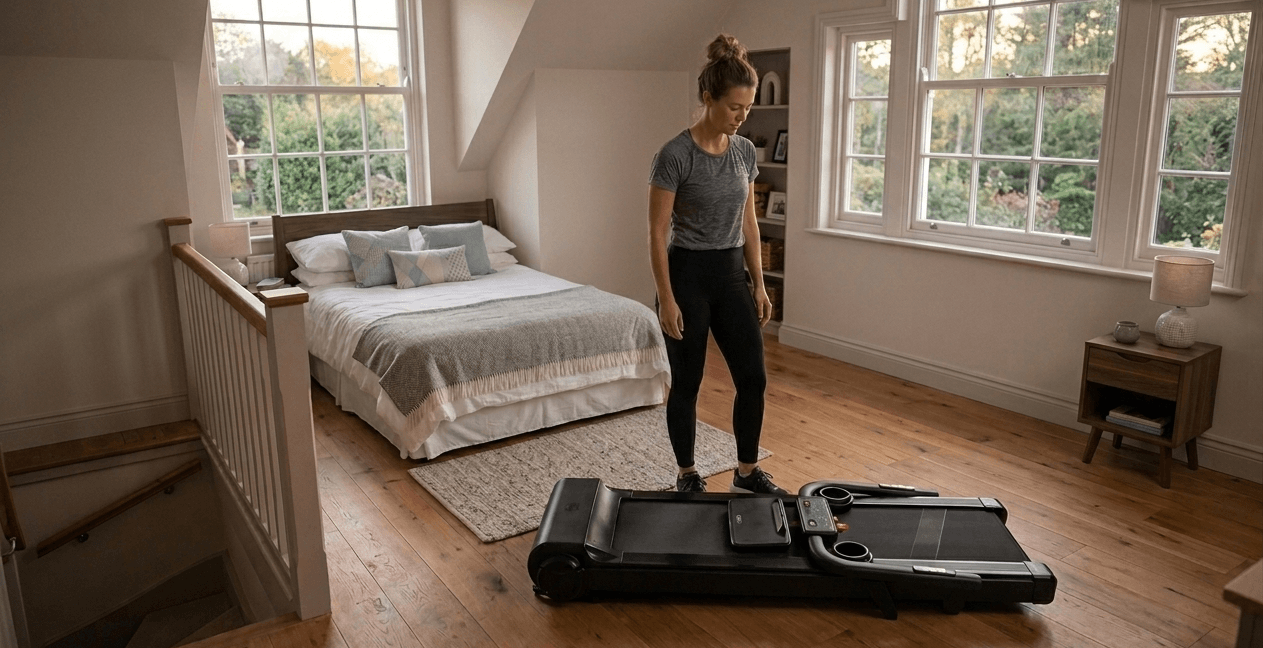
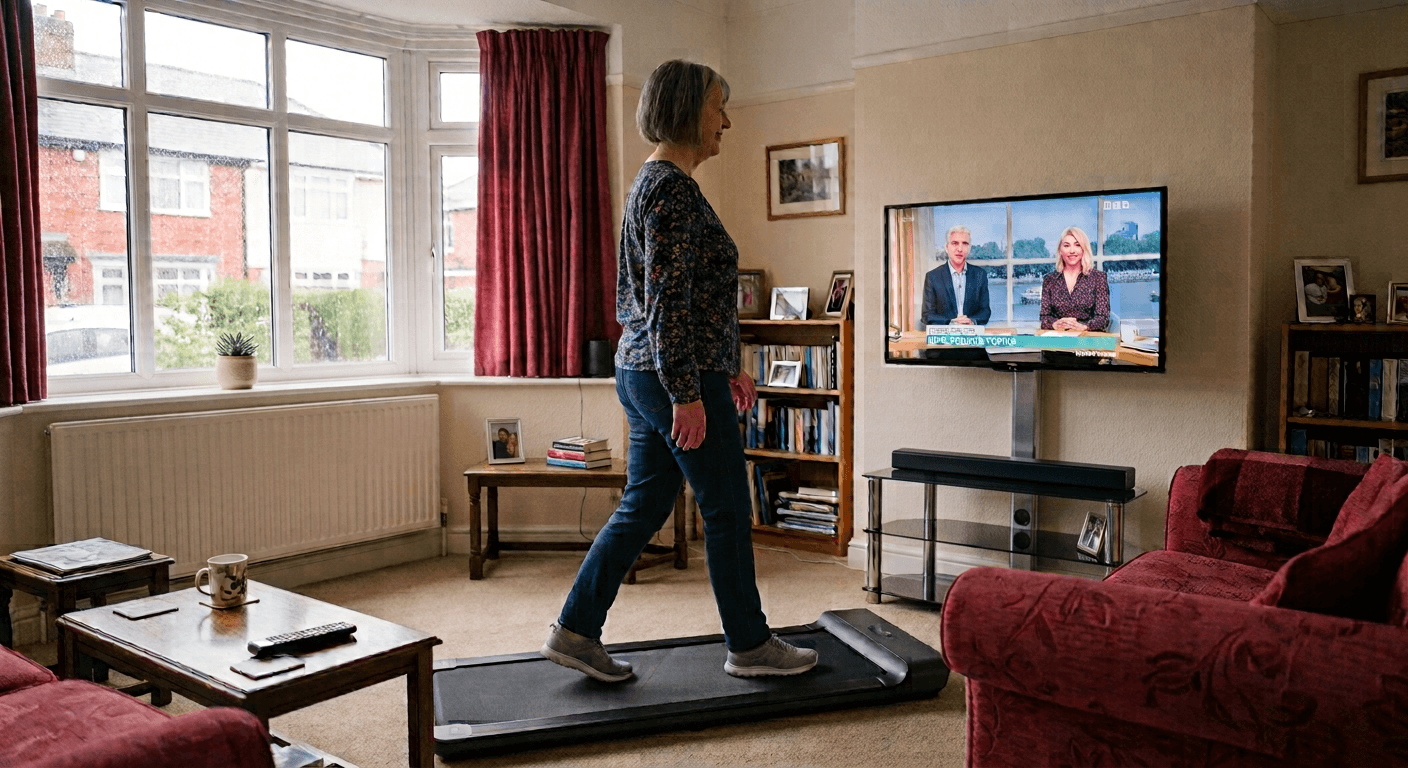
A treadmill lets you walk, jog or run indoors at a pace you control. Here is how it works, what you can gain from using one and when another machine may suit you better.
What is an electric treadmill?
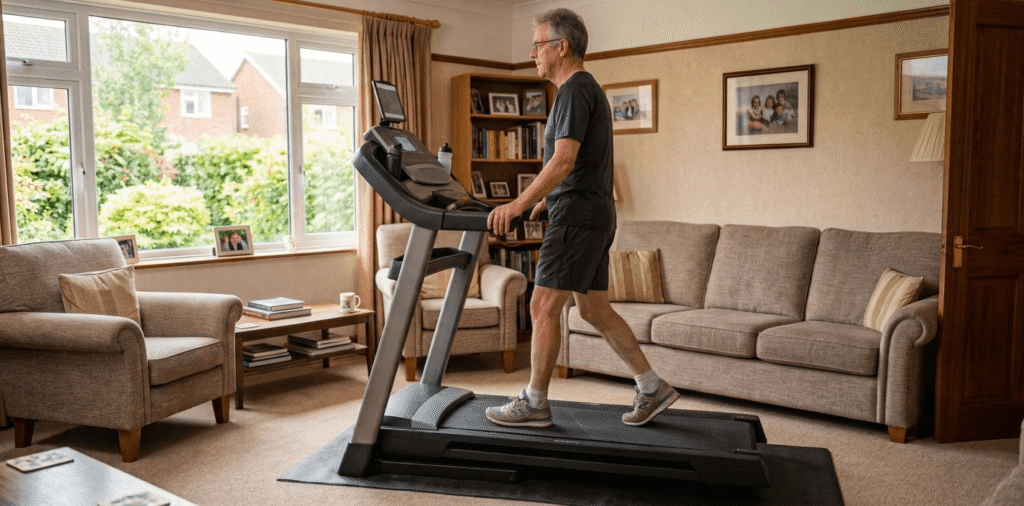
An electric treadmill features a motor that moves a continuous running belt beneath your feet. You choose the speed on the console and walk, jog or run to match it. Unlike a manual treadmill which is self-propelled, you do not have to drive the belt yourself.
You can start with a gentle walk and build up to a jog or run once you feel comfortable with increasing the speed. Don’t be afraid to use the handles and make sure you’ve attached the emergency stop cord to your clothing in case the worst happens! Alternatively, many treadmills come with adjustable incline which makes your workout more challenging but without upping the speed.
💡 Buying advice: If you are wondering what running area, motor size, frame type etc you need, please see the Treadmill Buying Guide which covers the main criteria to look for when buying a machine. Also try out my Treadmill Finder tool which provides some hand-picked treadmill models based on your specific needs.
Health and safety information: This page provides general fitness information, not personal medical advice, a diagnosis or a treatment plan. It cannot tell you whether treadmill exercise is safe for your particular health or mobility needs.
If you have a medical condition, a recent injury, persistent joint pain or concerns about your ability to exercise, speak to your GP, physiotherapist or another suitably qualified healthcare professional first. Follow the machine’s instructions, start at a manageable pace and stop exercising if you develop pain, dizziness, chest discomfort or unusual breathlessness. Seek urgent medical assistance for potentially serious symptoms.
Benefits of a treadmill
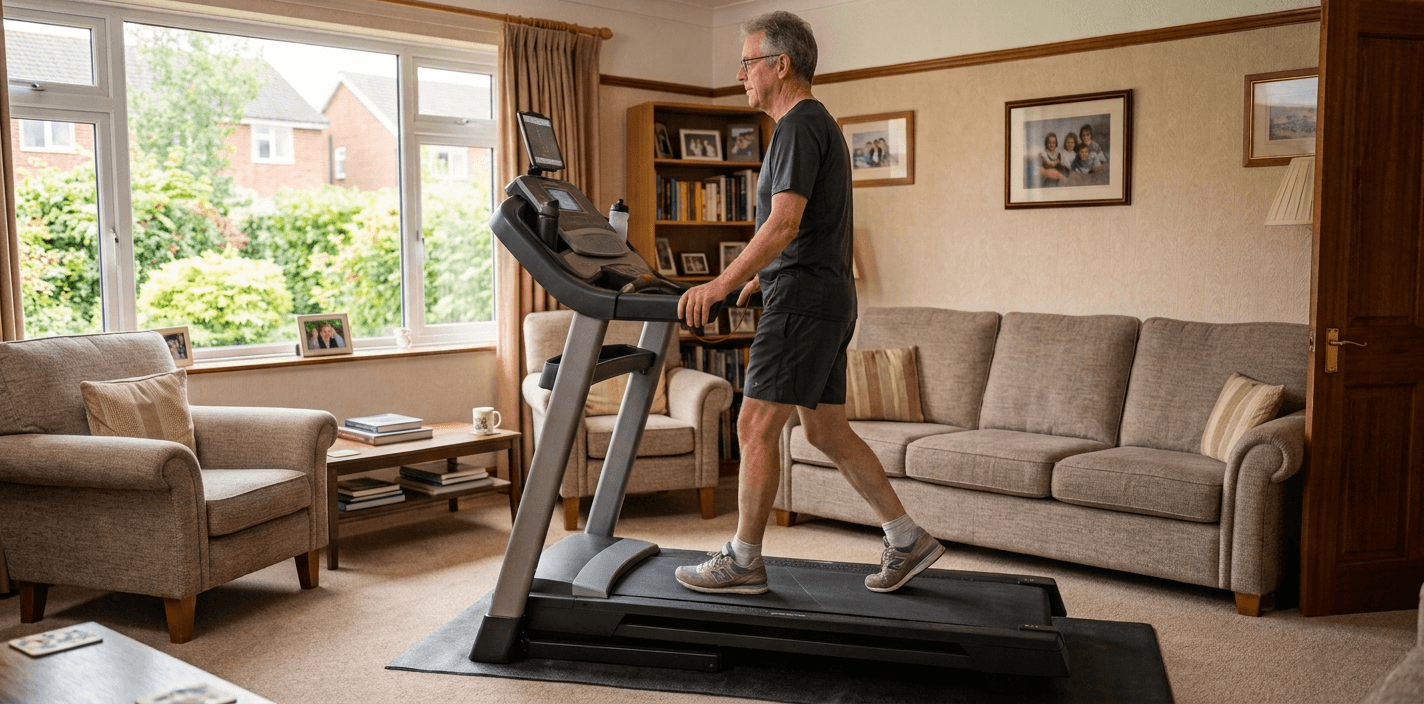
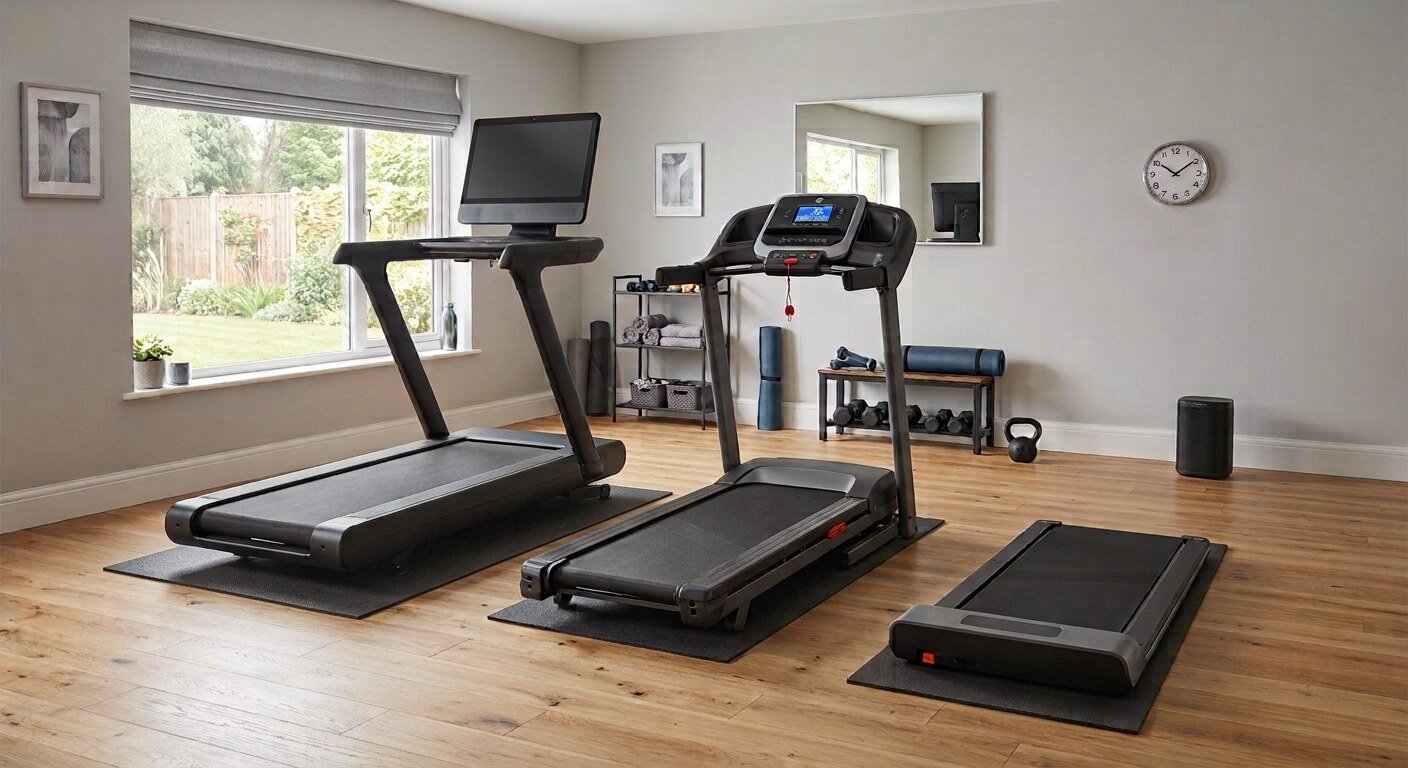
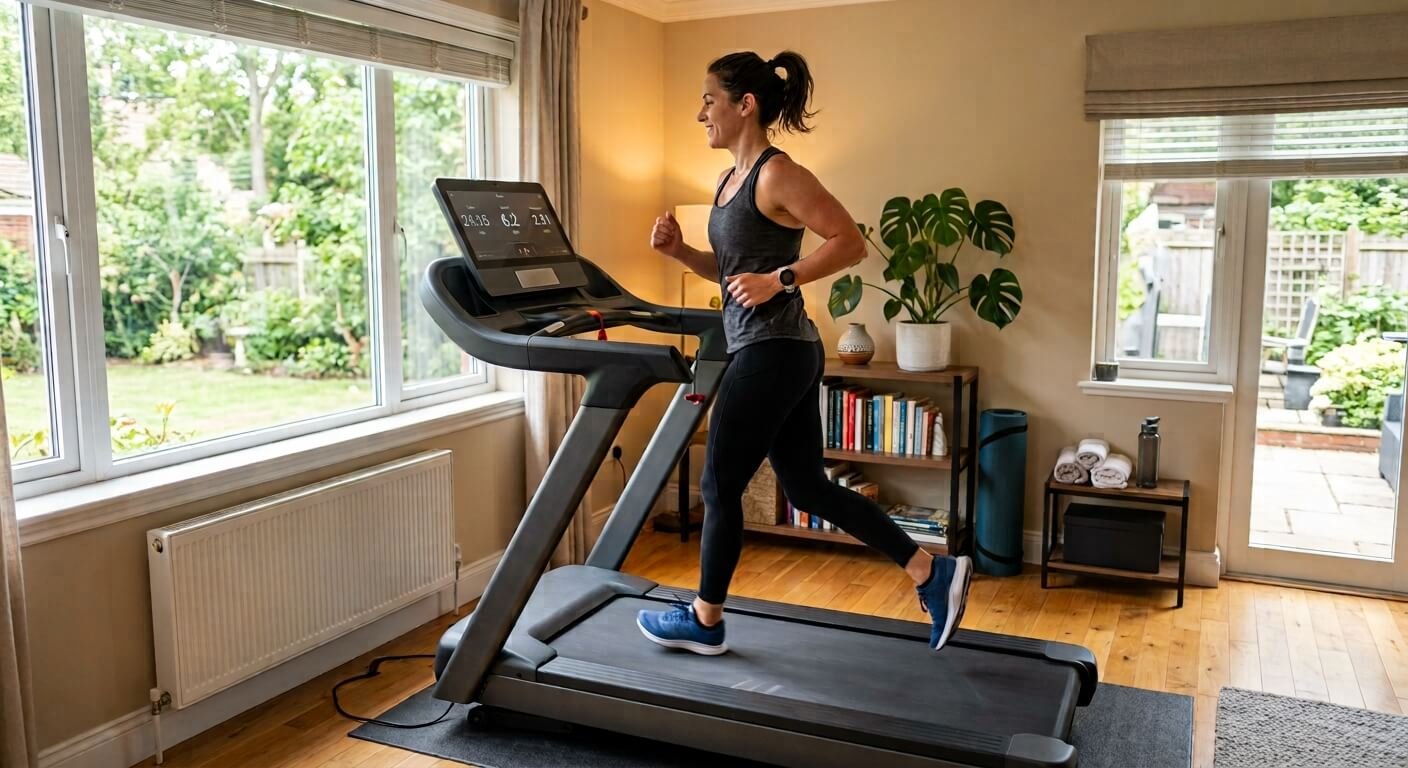
Having a treadmill at home means you don’t have to venture outdoors or to the gym to get your runs in. This is great if the weather isn’t nice, you have work or family commitments to fit around or you simply feel safer or more comfortable running indoors.
Another key benefit of indoor runs is that you have more control over your running conditions – you can set the speed and incline (very practical if you’re following a particular running programme e.g. interval or tempo runs) and your performance is not affected by factors like the wind, rain, undulating terrain and obstacle dodging among other things!
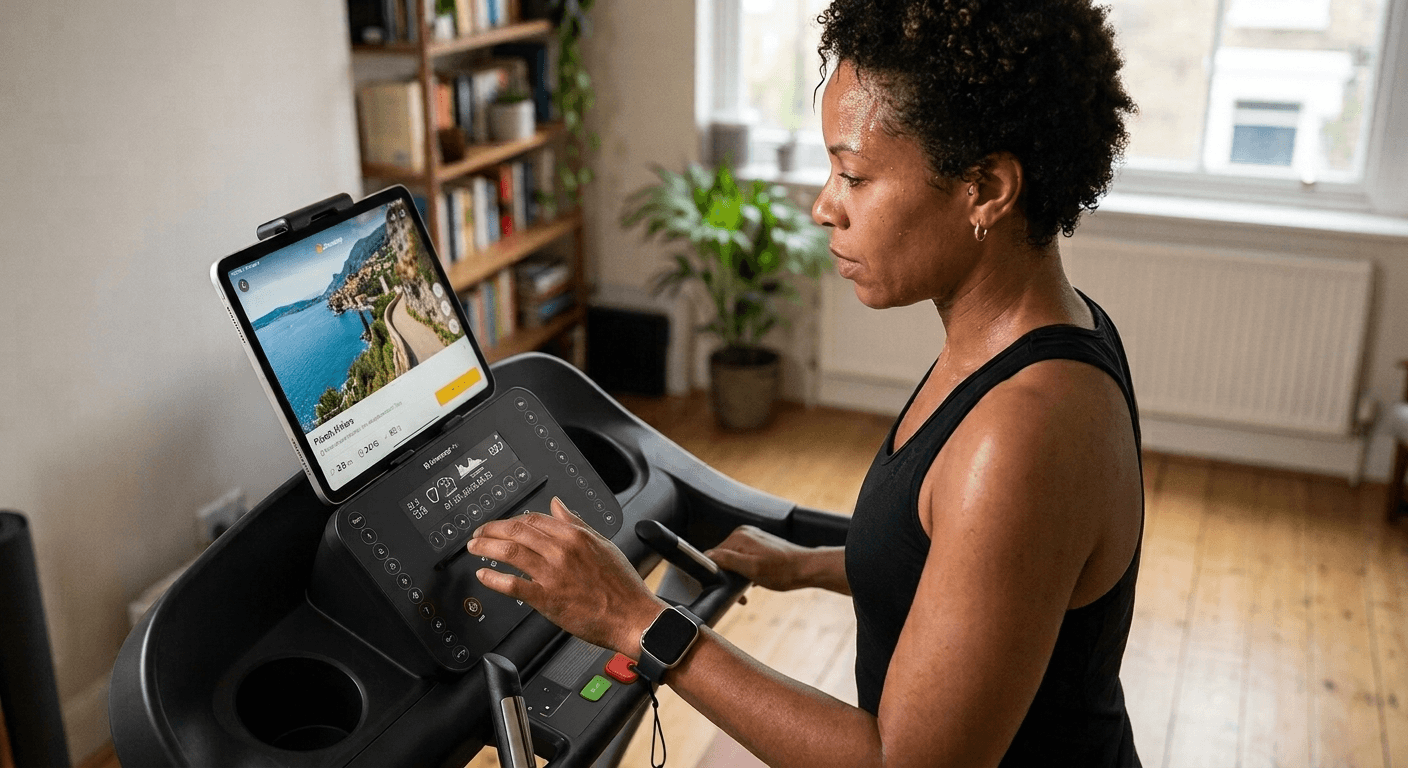
Also, if the idea of staring at a wall for an hour puts you off, many treadmills allow you to connect to apps for virtual routes – you can be running by the coast, across the beautiful countryside or along a mountain trail! If not that, just stick on Youtube for some cat videos!
Why people use treadmills
- Cardiovascular fitness: Walking at a brisk pace or running makes your heart and lungs work harder. You can adjust the effort to suit your current fitness.
- A consistent routine: You can still exercise when it is dark, wet or icy outside, without planning a route.
- Control over your pace: Change the speed in small steps so that warming up, maintaining a steady effort and slowing down feel manageable.
- Progress you can follow: Repeating a comfortable pace and duration gives you a straightforward way to notice improvement over time.
Walking at a comfortable pace works well for steady cardio, while a higher speed can make running intervals very demanding. The movement mainly trains the lower body. Your arms swing and your core helps with balance, but the machine does not give your upper body the same active resistance as a rower, air bike or cross trainer with moving handles.
What the research says: A 2025 systematic review in The Lancet Public Health linked higher daily step counts with better long-term health outcomes. It studied daily movement generally, not treadmill ownership, so the lesson is to build regular activity rather than chase a particular machine or step target. Read the review on daily steps and health outcomes.
Which muscles does a treadmill work?
Treadmills mainly work the muscles you use when walking and running. The exact balance changes with speed, stride and incline. A treadmill is not a substitute for strength training, but your legs and hips work throughout every session.

- Quads (front of thighs): Help straighten the knee and support your body as you move forwards.
- Hamstrings (back of thighs): Help control the leg as it swings and contribute to moving the hip.
- Glutes (buttocks): Help extend and stabilise the hips as you walk or run.
- Calves and muscles around the shins: Work as your foot meets the belt and pushes off.
- Core muscles: Help keep your body steady, but a treadmill is mainly a lower-body cardio machine.
What the research says: A small laboratory study measured activity in several leg, hip and core muscles during treadmill walking and jogging at different inclines. Muscle activation changed with the movement and machine setup. The study helps explain the diagram but does not show that walking on a treadmill builds the same strength as resistance exercise. Read the muscle activation study.
Is a treadmill good for weight loss and burning belly fat?
Yes, a treadmill can help with weight loss because walking and running increase your activity and energy use. Whether your body weight changes will also depend on food intake, the rest of your activity, consistency and individual circumstances. A treadmill alone cannot guarantee weight loss.
What about burning belly fat? You cannot choose exactly where your body loses fat by selecting a machine or a particular treadmill setting. Regular aerobic exercise can help reduce overall body fat and waist size over time, but results vary from person to person. You do not need to run at top speed or follow a viral incline challenge for the session to count.
What the research says: A 2024 JAMA Network Open meta-analysis of 116 randomised trials found that increasing weekly aerobic exercise was associated with reductions in body weight, waist circumference and body-fat measures among adults with overweight or obesity. It included several forms of exercise, so the findings are not proof that treadmills work better than bikes or cross trainers. Read the systematic review and meta-analysis.
For beginners, the best choice is usually an activity they feel comfortable doing regularly. If you want to see which types of equipment might suit your goals and available space, try the Fitness Equipment Finder.
Is a treadmill easy on the knees?
That depends on whether you are walking or running, how your knees respond to the activity and any existing injury or joint condition. Walking on a treadmill is generally less demanding than running, but both involve your feet repeatedly supporting your body weight. A treadmill is not automatically the best choice for sore knees.
Some treadmills have cushioning, although the feel and performance vary between models. Cushioning does not make running impact-free or mean a treadmill is suitable for every knee problem. If a treadmill causes pain or makes existing symptoms worse, stop and reassess the activity rather than trying to push through it.
What the research says: This research asked whether walking and recreational running make the joint damage from knee osteoarthritis progress faster – not whether they cause pain. After examining 20 reviews and 12 individual studies, the authors found no consistent link between these activities and faster joint deterioration. This suggests that having knee osteoarthritis does not automatically mean walking or running will make the condition worse. It was not a study of treadmills and cannot tell you whether either activity will be comfortable or suitable for your knees. If you have knee pain or are recovering from an injury, ask a physiotherapist or other qualified clinician what exercise is appropriate for you. Read the research overview on knee osteoarthritis.
If you need a gentler option: A recumbent exercise bike or cross trainer may suit you better because their movements differ from walking or running. Check how comfortable it feels to get onto the machine too. If you are recovering from an injury or have been given exercise restrictions, follow advice from your clinician or physiotherapist.
Who is a treadmill suitable for?
Treadmills suit a wide range of people, but there are situations where another machine might make more sense. The intended use matters more than whether a treadmill looks impressive in a home gym.
Who it can suit
- People who enjoy walking: A controlled indoor route can make it easier to keep a walking habit going.
- Beginners building fitness: Start at a pace that feels comfortable and increase the time or effort gradually.
- Runners: A treadmill allows steady pacing when outdoor conditions or daylight get in the way.
- Households with different fitness levels: Each person can choose a suitable speed, subject to the machine being right for their own needs.
Who may prefer another machine
- People who need seated exercise: An upright bike or recumbent bike might be more manageable.
- People who find repeated foot contact uncomfortable: A cross trainer may offer a different movement, but it is not suitable for every joint or balance problem.
- Anyone with significant balance restrictions: A moving belt can be difficult to manage. Seek individual guidance before using one.
- People who want upper-body strength work: Treadmill walking and running do not replace exercises for the arms, back and shoulders.
A conventional treadmill also needs a dedicated area for use and space behind it for safety. Some models fold, but the category as a whole is not a particularly compact choice. That is why this guide rates treadmills as a good fit for intervals and steady cardio, but not as a typical strength for full-body training or a compact footprint.
How to use a treadmill
The first few sessions should be about becoming comfortable with the moving belt and controls, not trying to break any records. Exact controls vary, so check your machine instructions before using it.
Using a treadmill for the first time
- Know the controls: Find Start, Stop, speed adjustment and the emergency stop. Attach the safety key clip where the instructions tell you to.
- Begin slowly: Start the belt at a pace you can manage and settle into a natural walking stride before making changes.
- Keep your posture relaxed: Look ahead rather than down at your feet. Use the handrails to steady yourself when necessary, but avoid leaning on them throughout the session.
- Slow down before stopping: Reduce the speed gradually, use the normal stop control and step off only when the belt has stopped.
💡 Tip: Avoid looking at your phone while walking quickly, drifting towards the back of the belt or stepping onto a belt that is already moving fast. Use the machine only where there is the clearance recommended in its manual.
How often should a beginner use one? There is no single number that suits everyone. A short, comfortable walk a few times a week can be a sensible way to begin. Build up as your fitness, recovery and available time allow. If you feel unsteady, dizzy or unwell, stop the session.
For a detailed discussion of features such as belt dimensions, incline settings and motor ratings, head to the treadmill buying guide.
Treadmills vs cross trainers
Compare treadmills with ten other equipment types, including how suitable they are for quieter workouts. Cross trainers are selected first, but you can change the dropdown choices or add one more. The heading and table update together, with each rating labelled Good fit or Not a typical strength.
Walking on a treadmill is lower impact than running, so the Low-impact movement row shows separate results for each. Noise also changes with pace: a treadmill motor, footsteps and floor vibration can all be heard, especially during running. Magnetic spin bikes are generally quieter; older friction-resistance bikes can be more noticeable.
Compare with: Cross trainers (1 of 2 selected)
Choose up to two other machines from the dropdown.
| Suitability | Treadmills | Cross trainers |
|---|---|---|
| Low-impact movement | Walking: ✓ Good fitRunning: ✕ Not a typical strength | ✓ Good fit |
| Full-body workout | ✕ Not a typical strength | ✓ Good fit |
| High-intensity intervals | ✓ Good fit | ✓ Good fit |
| Steady cardio | ✓ Good fit | ✓ Good fit |
| Accessible for limited mobility | ✕ Not a typical strength | ✕ Not a typical strength |
| Compact footprint | ✕ Not a typical strength | ✕ Not a typical strength |
| Quiet workouts | ✕ Not a typical strength | ✓ Good fit |
Low-impact movement
Full-body workout
High-intensity intervals
Steady cardio
Accessible for limited mobility
Compact footprint
Quiet workouts
Why these ratings?
Treadmills: Treadmills suit sustained walking or running and hard intervals. Walking has less impact than running, but a moving belt and footfalls are noticeable, particularly when running. Most standard treadmills take up significant space and require good standing balance.
Cross trainers: Feet remain on the pedals and moving handles involve the arms and legs. Magnetic or belt-driven cross trainers can be relatively quiet, although worn rollers and squeaking joints can make noise. Standing balance and floor space are still needed.
Ratings describe typical equipment, not every model. Quietness also depends on the room, flooring, intensity and maintenance. Low impact does not mean painless, and suitability after injury or surgery needs individual advice.
FAQ
Is walking on a treadmill every day okay?
For many people, walking regularly is a reasonable way to stay active. Choose a pace and duration that suit your fitness and recovery. If you have pain, significant fatigue or a condition affecting exercise, adjust the plan and seek individual advice.
Is 30 minutes on a treadmill enough to help with fitness?
It can contribute to your weekly activity, whether you walk briskly or run. The effect depends on effort, consistency and your overall activity. There is no need to treat 30 minutes as a magic threshold.
Does a treadmill burn belly fat?
Walking or running can support overall fat loss, including changes in waist size, when combined with a sustainable routine and appropriate food intake. It does not target fat from one body area.
Is treadmill walking better than walking outdoors?
Neither is always better. Treadmills make speed and weather easier to control. Outdoor walking adds fresh air, changing terrain and different surroundings. Choose whichever helps you stay active.
What are the main disadvantages of a treadmill?
Running involves repeated foot contact, the moving belt needs attention, machines can be noisy and a treadmill takes up room. Some people prefer seated cycling or a cross trainer instead.
Is a treadmill good for older adults?
It can be for an older adult who is comfortable walking on a moving belt and can use the controls safely. Balance, mobility, handrail position and any medical restrictions matter more than age alone.
Can I get fit using only a treadmill?
You can improve aerobic fitness and walking or running stamina with regular treadmill use. For a balanced routine, include strength work and any mobility exercises that suit your needs.
Can treadmill running damage your knees?
Running can irritate an existing problem, but research does not support a simple rule that all running damages healthy knees. Pain, past injury, training load and individual circumstances matter. Seek professional advice if symptoms persist.
How long does a home treadmill last?
There is no single lifespan. Build quality, maintenance, usage and support all matter. The treadmill buying guide explains practical ownership and warranty considerations in more detail.
How long does it take to walk 10,000 steps on a treadmill?
It depends on your stride and walking speed, so there is no reliable fixed time. Use a step-counting device if you want to track steps rather than assuming the treadmill distance represents a particular number.
What mistakes should beginners avoid?
Starting too fast, looking down at a phone, holding the rails unnecessarily, ignoring the safety key and stepping off before the belt stops are all worth avoiding.
Author: Ian Smith For the past five years I’ve worked in marketing for one of the UK’s leading fitness equipment brands. During this time I’ve learnt a thing or two about fitness equipment: what’s out there and commonly asked customer questions. I also regularly used the equipment myself and would help test out new products. LinkedIn profile
Affiliate Disclosure: This page contains affiliate links. If you click through and buy something, I may earn a commission at no extra cost to you – this doesn’t affect my opinions and reviews. As an affiliate I earn from qualifying purchases.
Where to go next
Now you know what a treadmill does, the next step is deciding whether one suits your exercise plans. These guides and tools cover choosing and comparing actual models without repeating all that buying advice here.