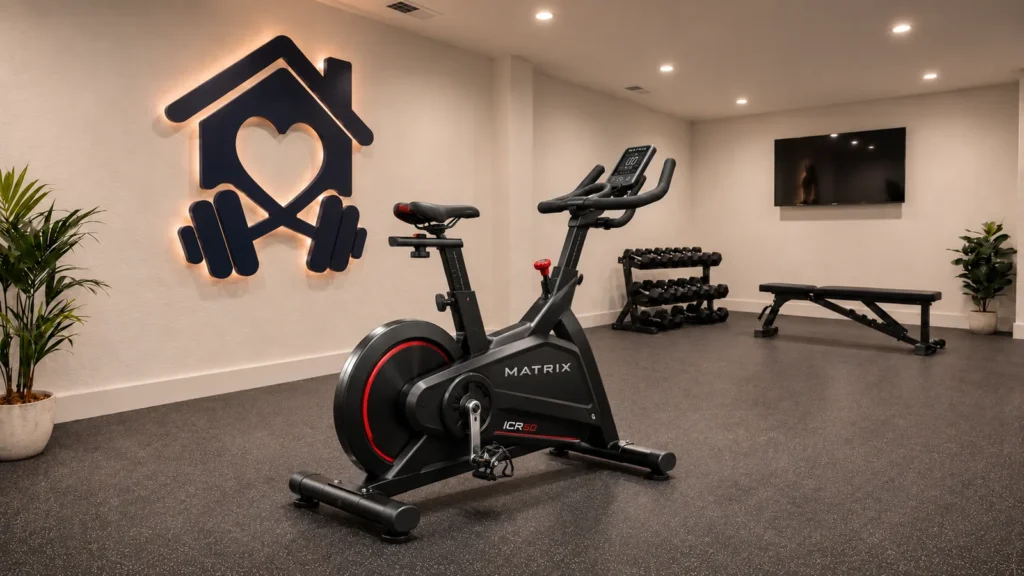
Matrix ICR50 Review
Matrix ICR50 quick verdict
The Matrix ICR50 is a good fit for riders who regularly follow interval-heavy spin classes. Its 11-position lever makes it quick to change the magnetic resistance without navigating a screen.
It uses magnetic resistance and offers SPD-compatible clips plus toe cages. The adjustable riding position and 52 kg (115 lb) machine weight should suit riders who value a steady platform for hard efforts.
Bluetooth FTMS can add guided rides through your own device, but the main attraction is the bike itself. You do not need a subscription to make good use of the resistance lever.
Best for: harder class sessions where quick manual changes matter
Look elsewhere: riders who need dozens of tiny numeric resistance increments
Affiliate link
Affiliate Disclosure: This page contains affiliate links. If you click through and buy something, I may earn a commission at no extra cost to you – this doesn’t affect my opinions and reviews. As an affiliate I earn from qualifying purchases.
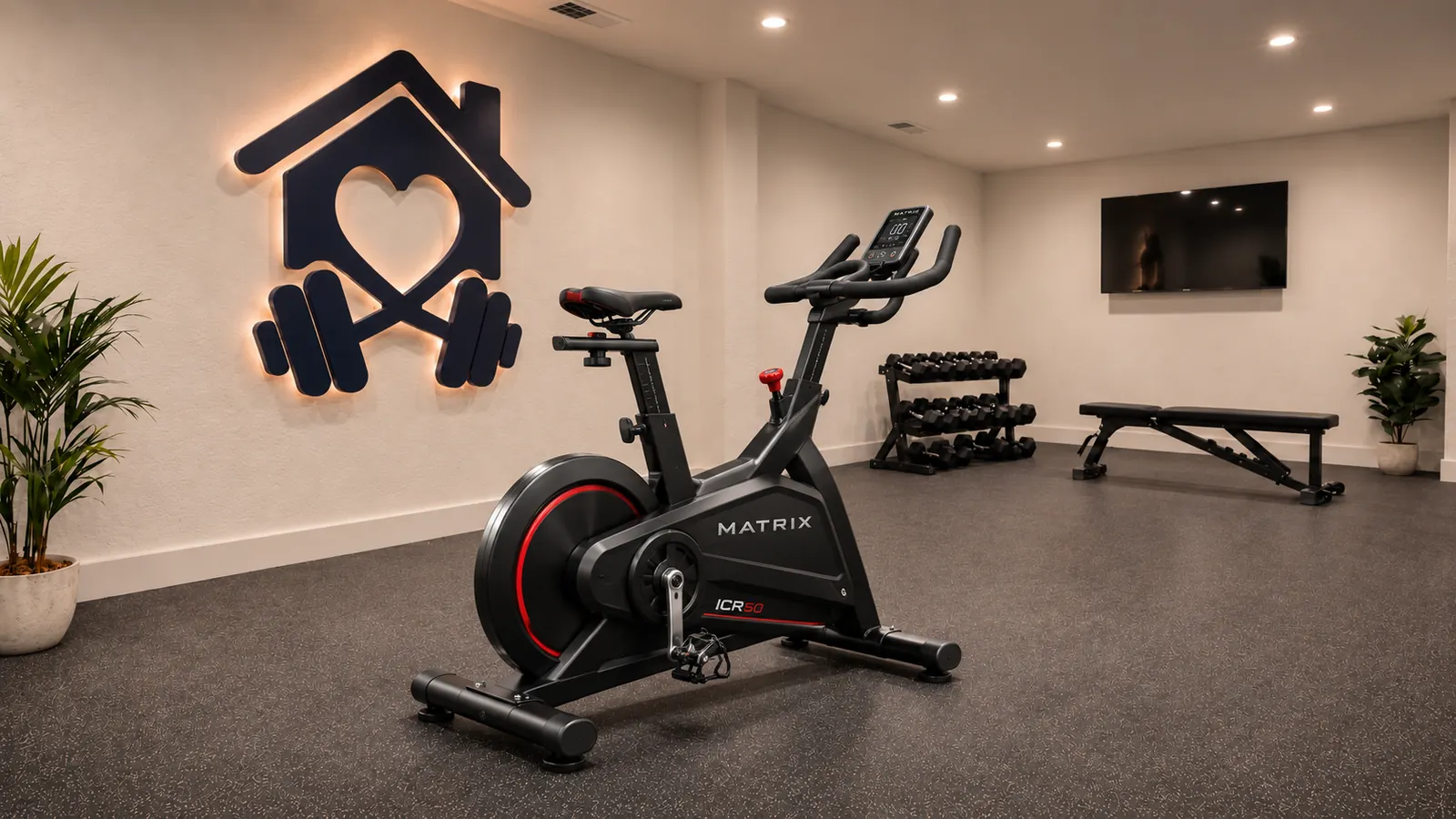
Matrix ICR50 specifications
| Resistance type | Magnetic |
| Resistance levels | 11 |
| Pedals | Dual |
| Apps and connectivity | Kinomap, @Zone |
| Power requirement | Self-powered |
| Maximum user weight | 136 kg (300 lb) |
| Assembled dimensions (L x W x H) | 135 x 57 x 109 cm (53.1 x 22.4 x 42.9 in) |
| Machine weight | 52 kg (114.6 lb) |
I used different types of indoor bikes while working for a fitness equipment brand, but I have not tested this ICR50.
I have looked particularly at its lever, adjustment range and suitability for harder sessions.
- Resistance system and controls – how easily they change, and whether resistance can be seen and repeated.
- Riding position – basic versus four-way fit adjustment, hand positions and whether pedals suit the rider.
- Home practicality – power, space, machine weight, moving it and keeping noise down. Training features and value – what an app can actually control, screen or tablet choice, plus support and warranty.
Affiliate link
Who is the Matrix ICR50 best for?
I like the ICR50 for riders who follow fast-changing studio classes. Its 11-position magnetic lever is quick to reach, and it offers a clear position to return to without scrolling through dozens of electronic levels.
The 11 lever positions give you larger changes between levels, so riders wanting very fine programmed adjustments may prefer electronic control. The rear flywheel is easier to keep away from sweat, and the SPD/toe-cage pedals make sense for households with different cycling habits.
What Stands Out
Quick lever changes for classes – The 11-position magnetic lever is easy to reach and use when an instructor calls for a change.
Fits different riding positions – Four-way adjustment to both bars and saddle gives more room for a comfortable reach.
Dual-purpose pedals – SPD-compatible clips suit cycling shoes, while toe cages let other household members use trainers.
Rear flywheel is well protected – Its rear placement helps keep sweat away from the wheel, useful if you train hard and often.
Things to consider
Only 11 resistance increments – The larger increments mean less fine adjustment than on bikes with 50 or 100 levels. That is about fine control, not maximum difficulty.
You use your own screen – Bluetooth can send ride data to supported apps, but the bike is not a screen-led studio class machine.
A weighty frame – At 52 kg (114.6 lb), it should feel settled during standing efforts, but carrying it upstairs is still work.
A CLOSER LOOK
How the Matrix ICR50 performs
RESISTANCE
Resistance system and controls
The ICR50 has 11 magnetic resistance levels selected by a quick-adjust lever. The lever is easy to reach when a class moves from a recovery to a harder interval.
Its 11 positions give larger increments than electronic bikes with 50 or 100 levels, but that tells you nothing about maximum difficulty.
RIDING COMFORT
Seat, bars and fit
The ICR50 offers vertical and fore-aft adjustment at the saddle and bars. It is helpful for finding a comfortable position for harder sessions.
I would expect that flexibility on expensive bikes, though most casual riders can be comfortable with more basic adjustments. The dual-option pedals work with SPD cycling shoes or ordinary trainers.
The ICR50 has SPD clips and toe cages. That gives regular cyclists the option of clipping in, without preventing someone else from using trainers.
FLYWHEEL AND RIDING FEEL
Pedalling feel and momentum
The bike uses a rear-mounted aluminium flywheel. On a magnetic bike, I would place less weight on this figure than on the resistance system and the frame. A stronger frame is more reassuring if you are heavier or regularly do hard sprints.
INTERFACE
Console and workout data
The setup includes Your own phone or tablet (device holder). What matters during a class is whether it shows an exact resistance number or you turn a manual control by feel.
CONNECTED TRAINING
Apps and subscriptions
Bluetooth FTMS lets the ICR50 send workout data to compatible apps.
Resistance remains controlled by the physical lever, so it is not an automatically changing terrain simulator.
SPACE AND MOVEMENT
Frame, weight and transport
At 52 kg (115 lb), I would avoid carrying it up stairs regularly. Transport wheels can make moving it around the same floor easier, but you still need to lift one end to tip the bike onto them.
POWER
Does the bike need a socket?
No. The ICR50 uses manual magnetic resistance, so you do not need a mains socket just to adjust the effort.
OWNERSHIP
Warranty and after-sales cover
Matrix fitness equipment sold by Johnson Fitness UK has three years of parts and labour cover. The longer motor cover in the general policy applies only to motorised equipment, so it should not be assumed for the ICR50’s magnetic resistance lever.
SPACE CHECK
Matrix ICR50 dimensions and space required
The assembled dimensions are 135 x 57 x 109 cm (53.1 x 22.4 x 42.9 in). Check the doorway and the space around the bike, especially if it needs taking upstairs.
| Dimensions in use | 135 x 57 x 109 cm (53.1 x 22.4 x 42.9 in) |
| Machine weight | 52 kg (114.6 lb) |
| Maximum user weight | 136 kg (300 lb) |
| Recommended rider height | 155-195 cm (5 ft 1 in-6 ft 5 in) |
| Power requirement | Self-powered |
EXERCISE BIKE COMPARISON
Compare the Matrix ICR50 with other bikes
Choose up to three other exercise bikes to compare with the Matrix ICR50 Indoor Cycle. Resistance levels are not a measure of maximum resistance between different machines.
Matrix ICR50 final verdict
I particularly like the ICR50 for interval work. An 11-position lever gives you quick, clear changes without scrolling through lots of electronic levels. Its magnetic resistance is a useful advantage for quieter home workouts.
It is a heavier bike at 52 kg (115 lb), which is reassuring for frequent hard efforts but worth bearing in mind if you need to carry it upstairs. You also get SPD clips and toe cages.
For riders who want a robust magnetic cycle with fast resistance changes, I would put the Matrix high on the shortlist. Its connected features are useful extras rather than the main reason to buy.
Affiliate link
Matrix ICR50 FAQ
Is the Matrix ICR50 good for spin classes?
Yes. The ICR50 is particularly well suited to interval classes because its 11-position magnetic resistance lever is quick to adjust.
Does the Matrix ICR50 have magnetic resistance?
Yes. It uses magnetic resistance, which generally runs more quietly and needs less maintenance than a friction-pad system.
How many resistance levels does the Matrix ICR50 have?
There are 11 numbered resistance levels on the quick-adjust lever. That is useful for jumping between interval efforts without scrolling through lots of small adjustments.
Will the Matrix ICR50 fit a taller rider?
Maybe. The stated overall rider height range is 155-195 cm (5 ft 1 in-6 ft 5 in). Saddle height and handlebar reach matter more than total height alone, so check your leg length against the adjustments.
Does the Matrix ICR50 need a plug socket?
No. The 11-position manual lever does not need a mains socket.
What should I check before buying the Matrix ICR50?
Check the 52 kg (115 lb) machine weight against where it will live, and make sure the pedal and handlebar setup suits you.
Author: Ian Smith For the past five years I’ve worked in marketing for one of the UK’s leading fitness equipment brands. During this time I’ve learnt a thing or two about fitness equipment: what’s out there and commonly asked customer questions. I also regularly used the equipment myself and would help test out new products. LinkedIn profile